Solving the Structural Bottlenecks of Commercial Robotics with SesameX™
Black Sesame Technologies is an AI computing company specialising in high-performance edge computing platforms for intelligent vehicles and embodied AI. Building on its experience in automotive-grade perception, safety, and computing architectures, the company developed SesameX™ to support the next stage of commercial robotics deployment.
As robotics companies move from prototype to commercial deployment, many encounter the same structural challenges: coordinating multiple AI workloads, ensuring functional safety, and enabling robots to keep learning after deployment. Black Sesame Technologies developed SesameX™, a full-stack AI computing platform, to address these bottlenecks through an integrated architecture rather than fragmented hardware.
“The future AI world is not in the cloud, but in every single edge device.”
~ Black Sesame Technologies
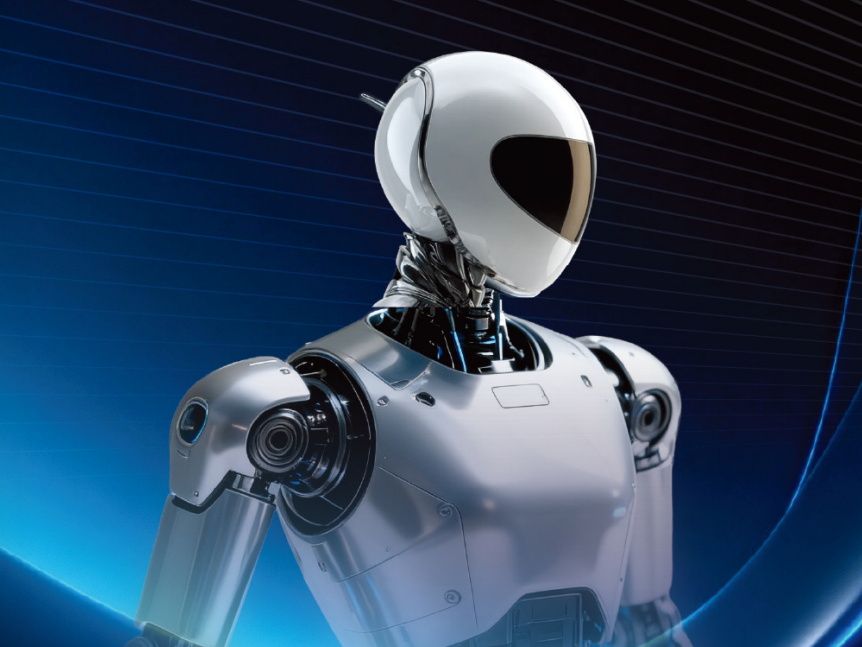
The Solution: An Integrated Architecture
Rather than combining standalone components, Black Sesame built SesameX as an end-to-end architecture where computing, scheduling, safety, and software are designed to work together.
The SesameX Scheduling Engine and Runtime coordinate perception, motion control, and deep inference so they run together at the edge without conflict or resource contention.
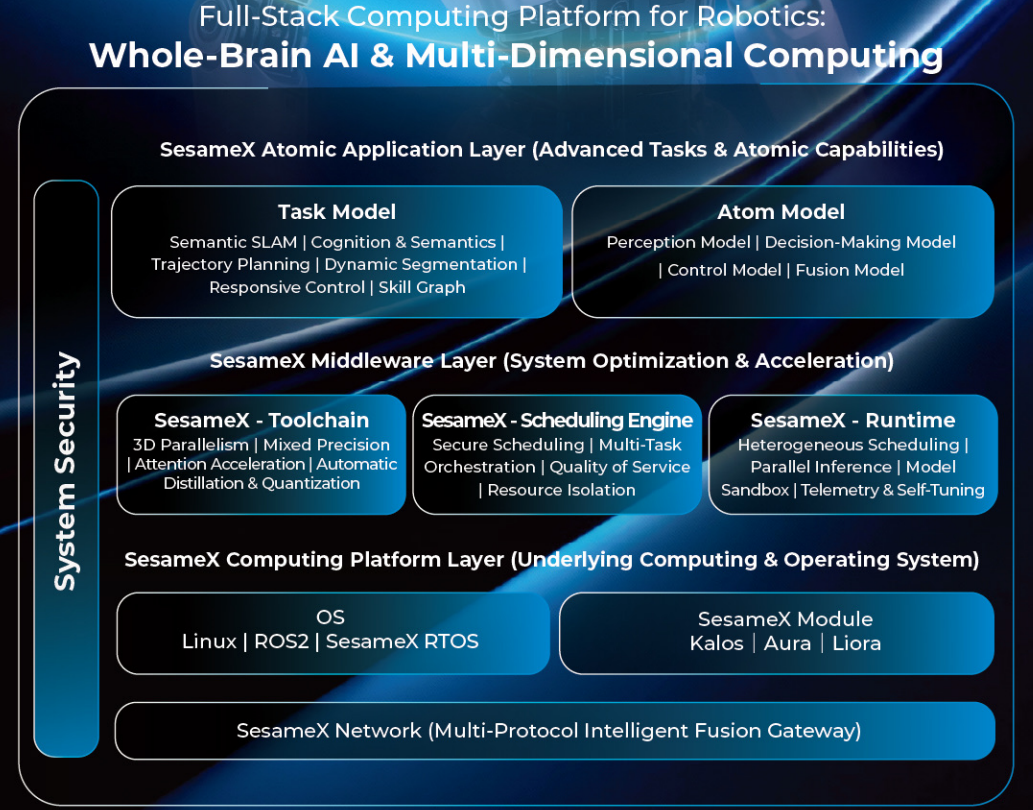
On top of this, an atomic application layer breaks complex tasks down into minimal, reusable “atomic skills”. This allows robots to dynamically combine skills to handle new situations instead of relying solely on fixed, pre-programmed routines. Black Sesame describes this as turning “deployment means evolution” from a slogan into a practical capability.
The platform spans three hardware tiers:
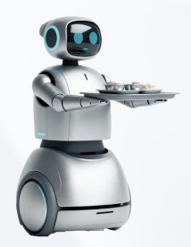 KalosFor low-speed wheeled and commercial service robots, including delivery, reception, inspection, cleaning, and logistics applications. |
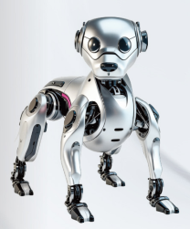 AuraA 70 TOPS module for multi-task robots such as legged inspection robots, robotic arms, and collaborative industrial platforms. |
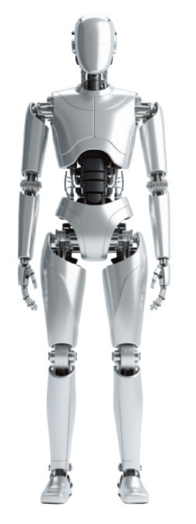 LioraA full-scale brain platform at close to 600 TOPS, designed for advanced embodied intelligence applications such as humanoid robots requiring semantic comprehension and self-learning. |
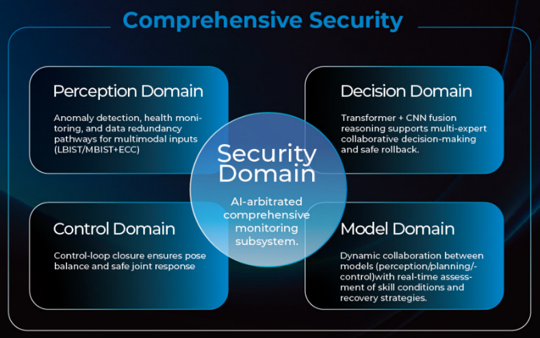
All three run on SesameX OS, compatible with Ubuntu, ROS, and ROS2, and are backed by X-Safety, an automotive-grade safety architecture built on a four-domain isolation structure spanning perception, decision, control, and model integrity.
The Impact: From Concept to Real Deployment
Black Sesame cites three deployments as evidence of the platform in real-world environments:
- COSCO SHIPPING’s Digital Technology division used the platform for an embodied intelligent inspection robot project, addressing the demanding operational conditions of ocean-going vessels.
- Sentinels, a strategic partner, integrated the SesameX Aura module into Rovar, which the company describes as the world’s first dual-wheeled outdoor companion robot, enabling stable motion and trajectory-following across gravel, steps, and lawns without cloud dependency.
- StarjourneyAI deployed Kalos- and Aura-based solutions in automated logistics vehicles, alongside industrial quadrupeds and wheeled platforms.
Looking Ahead
Black Sesame Technologies believes integrated edge AI platforms will play an increasingly important role as embodied intelligence continues to mature, expecting the sector to scale faster than smart vehicles did in their early years.
The company plans to continue working with ecosystem partners to accelerate commercial robotics deployment.